
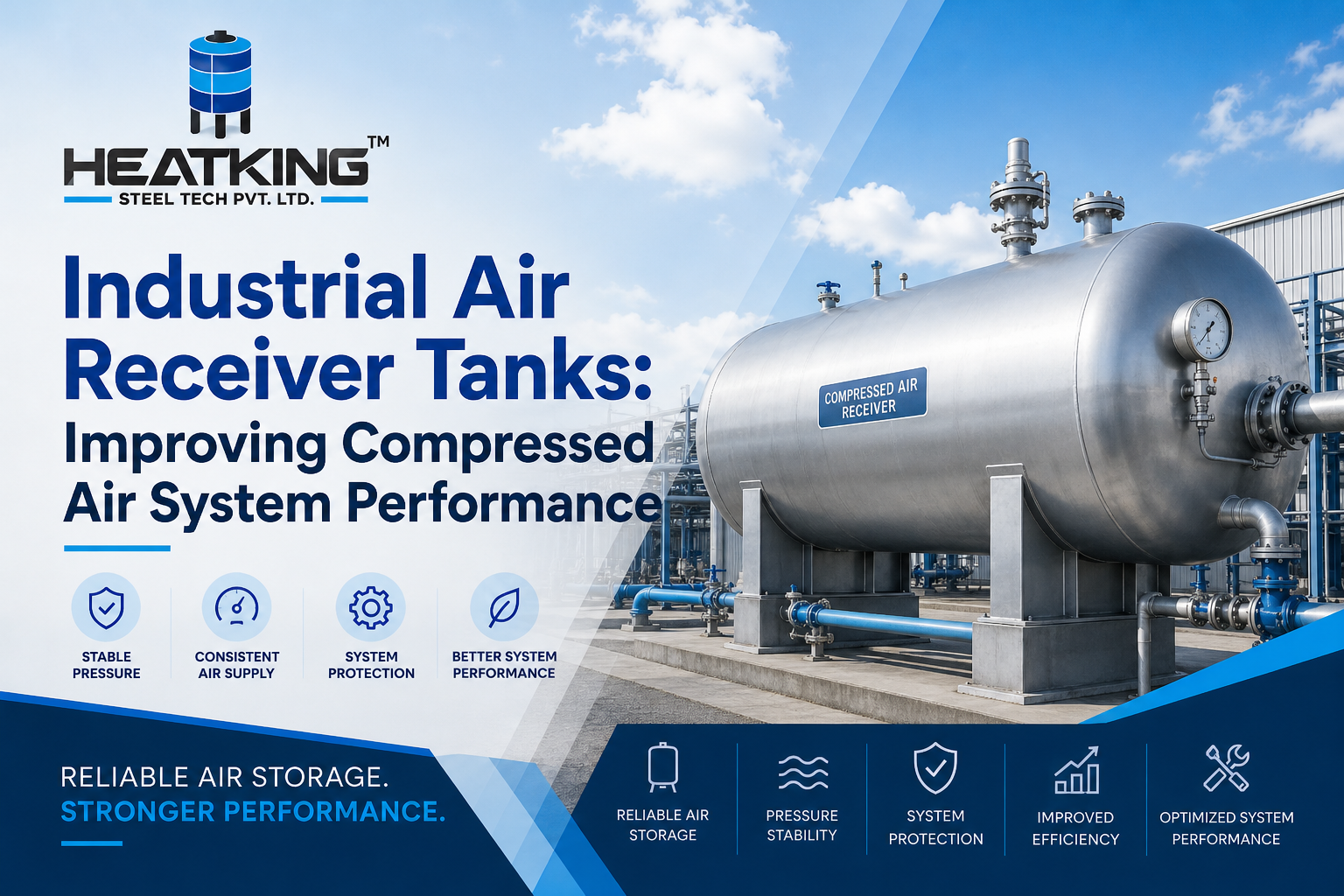
 Industrial Air Receiver Tanks
Most manufacturing plants, workshops, processing units and automated systems rely on the use of compressed air for their operations. There is a need for a means of storing compressed air that will regulate the flow of compressed air as and when there is a need for it within industries. This is where Industrial Air Receiver Tanks come into play.
The air receiver tank is a device that stores compressed air provided by the compressor for further use when there is a need for additional air. This tank regulates the pressure levels and reduces the number of compressor cycles. Choosing the right tank helps optimize the performance of the equipment.
What is an Industrial Air Receiver Tank?
An air receiver tank is a pressure vessel that is part of a compressed air system. It serves to store compressed air between the compressor and the compressed air consuming equipment. If air demand suddenly exceeds supply, the stored air will help supply the air without putting an immediate strain on the compressor.
Additionally, compressed air is cooled in the tank, which causes some condensation of moisture before the air continues its journey through the system. But adequate drainage and air treatment facilities are still required to remove moisture and contaminants.
Air receiver tanks can be built in either a vertical or horizontal design, depending on installation and space available. The material, storage capacity and pressure rating should be appropriate to the operating conditions and requirements of the facility.
Why Are Air Receiver Tanks Important for Industrial Operations?
Maintaining Stable Air Pressure
A steady air flow is sometimes essential for the efficient running of pneumatic tools and automatic machines. Demand can fluctuate suddenly and cause pressure fluctuations, which can impact production. The right-sized receiver has a stored supply of compressed air to accommodate brief periods of peak demand.
2. Minimising Compressor Cycles
A compressor will frequently cycle when the demands for compressed air vary from time to time. This may result in higher levels of wear and tear of the electrical and mechanical components. An adequately sized receiver could assist in minimising cycling, based on the control settings and configuration of the compressor system.
3. Ensuring Effective Moisture Removal
Water is present in compressed air. As the temperature of this air decreases inside the receiver, water will condense. It is important to ensure effective removal of this condensate through appropriate drainage arrangements. Considerations should be made on the use of air dryers, filters and an effective condensate system for sites requiring dry air.
4. Meeting Short-Term Air Demand
Some industrial processes consume compressed air on and off, or may require more air at certain phases of production. A receiver is used to store air when demand is low and discharge air when demand is high. This can assist the compressor system to operate more efficiently under varying operating conditions.
The Air Receiver Tanks Are Used in Industries Such as the Following:
Air receiver tanks are utilised in various industries for storing compressed air that is needed for the production process or to operate the equipment. Common applications include:
Materials handling
Motoring and operating compressed air-powered equipment like conveyors, lifts, and stacker cranes.
Packaging equipment/pumps
Compressed air for packaging equipment and pumps.
Manufacturing and engineering
Supplying compressed air to pneumatic tools, cylinders, and assembly equipment.
Automotive workshops
Supporting spray painting systems, impact wrenches, and other pneumatic tools.
Pharmaceuticals and food processing
Supporting pneumatic operations where air quality must meet specific process requirements.
Packaging and automation
Helping maintain an adequate air supply for filling, sealing, sorting, and handling equipment.
Water treatment plants
Supporting pneumatic controls and related industrial processes.
When Choosing an Air Receiver Tank, Several Considerations Need to Be Taken into Account:
Choosing the right tank is not merely a matter of guesswork about the amount of compressed air required for a facility. There are a number of practical questions to take into account before businesses buy equipment.
Capacity and air requirement
The size of the tanks should be equivalent to the compressor output and maximum air consumption, and the length of time of the fluctuation in air demand. If the receiver is too small, it may not be able to provide the buffer needed, and if the tank is too big, it can lead to more expense and space usage.
Common materials of construction
mild steel and stainless steel depend on the operating environment and process requirements. If there is a requirement for corrosion resistance or hygiene, stainless steel could be considered.
Working pressure
The working pressure of the tank should be suitable for the highest working pressure. The Buyer shall ensure that the relevant pressure vessel legislation and safety requirements are complied with.
Installation and maintenance
The available floor space, connection points, condensate drainage, inspection access and safety valve arrangements should be evaluated prior to installation. Frequent checks and maintenance can help detect corrosion, leaks, or other potential problems.
Choosing a Reliable Manufacturing Partner
Various considerations must be made when choosing an Industrial Air Receiver Tank provider, like the provider’s production processes, their material quality, testing procedures, and their capability to meet project specifications. Proper welding process, adequate safety fittings, and inspection based on relevant regulations will be necessary to make sure that pressure vessels are well-designed.
Heatking Steel Tech Pvt. Ltd. produces industrial tanks and pressure vessels, which come in various configurations, depending on the specific application needs. To choose the best configuration for your facility, talking with the provider about compressor capacity, working pressure, space available, and use of the equipment is crucial.
In case you are planning to install new compressed air system or to upgrade the old one, get in touch with Heatking Steel Tech Pvt. Ltd. to find out what you need.
